
If your air conditioner is running all day but your home still feels warm, you are not alone. During an Ontario heat wave, many homeowners notice that their AC runs longer, cools more slowly, or struggles during the hottest part of the afternoon.
Some of that can be normal in extreme heat. But if your AC is blowing warm air, airflow feels weak, or the temperature keeps rising inside your home, there may be a real problem.
Here is a practical checklist to help you understand what is happening, what you can check safely, and when it is time to call for AC repair.
Quick Answer: Is It Normal for an AC to Struggle in a Heat Wave?
It can be normal for your AC to run longer during a heat wave, especially between 2 p.m. and 7 p.m. when outdoor heat, humidity, and sun exposure are at their highest.
But it is not normal if:
- The air from your vents feels warm
- The AC runs for hours with no temperature drop
- Your home gets hotter while the AC is on
- Airflow is weak from multiple vents
- Ice appears on the indoor or outdoor AC lines
- The system makes buzzing, grinding, or rattling sounds
- The breaker trips when the AC starts
If any of these are happening, your system may need professional attention.
1. Do the Simple Vent Temperature Test
This is one of the most useful checks you can do.
Let your AC run for at least 10 to 15 minutes. Then check the temperature of the air going into the return vent and compare it with the air coming out of a supply vent.
In many properly working systems, the air coming out of the supply vent should feel noticeably cooler than the room air. A rough difference of about 8°C to 12°C can be a good sign that the AC is removing heat.
If the air coming out of the vents barely feels cooler, or feels warm, that may point to an issue such as low refrigerant, a dirty coil, weak airflow, or an electrical problem.
If the air is warm and the system keeps running, it is a good idea to book an AC repair service in Aurora, Ontario before the system is pushed harder.
2. Check the Air Filter Before Anything Else
A dirty air filter is one of the most common reasons an AC struggles during extreme heat.
When the filter is clogged, your system cannot move enough air across the coil. That can lead to poor cooling, longer run times, higher energy use, and in some cases, a frozen coil.
Check your filter today if:
- You have not replaced it in the last 1 to 3 months
- You have pets
- Your home has been dusty
- Your AC has been running almost nonstop
- Airflow from the vents feels weaker than usual
If the filter looks grey, dusty, or packed with debris, replace it. This is a simple fix that can make a noticeable difference.
3. Look for Ice on the AC Lines
Ice on your AC is never something to ignore, even during a heat wave.
Check the copper refrigerant line near the indoor unit or outdoor unit. If you see ice or frost, your AC may have restricted airflow, low refrigerant, or another issue that needs service.
Do not keep forcing the system to run in cooling mode if it is frozen. Turn cooling off and set the fan to “On” to help thaw the system. Then call a technician.
A frozen AC can stop cooling completely and may lead to more damage if it continues running under stress.
4. Make Sure the Outdoor Unit Can Breathe
Your outdoor condenser releases heat from inside your home. If it is blocked by grass, leaves, weeds, shrubs, or debris, it cannot release heat properly.
Check around the outdoor unit and make sure there is open space around it. Remove leaves, grass clippings, and anything blocking airflow.
Do not cover the unit while it is running. Also avoid placing patio furniture, storage bins, or garden items too close to the condenser.
During a heat wave, even a partially blocked outdoor unit can make your AC work much harder.
5. Check Whether the Problem Happens All Day or Only in the Afternoon
This detail matters.
If your AC cools the home well in the morning and evening but struggles in the late afternoon, your system may be fighting high outdoor temperatures, direct sun, attic heat, and humidity.
That does not always mean the AC is broken.
But if your AC struggles all day, never reaches the thermostat setting, or blows warm air even in the morning, that is more likely to be a system problem.
A helpful way to think about it:
- Struggles only during peak heat: could be heat load, insulation, sun exposure, or system capacity
- Struggles all day: more likely airflow, refrigerant, electrical, coil, or equipment issue
- Blows warm air anytime: likely needs professional diagnosis
- Turns on and off constantly: could be short cycling, thermostat issue, electrical issue, or improper airflow
This is where a professional HVAC inspection can save time and prevent guesswork.
6. Use the Thermostat Strategically
Setting your thermostat extremely low will not cool your home faster. If you set it to 18°C during a heat wave, the AC does not suddenly become more powerful. It usually just runs longer.
For many homes, setting the thermostat around 23°C to 25°C during extreme heat is more realistic and easier on the system.
You can also help your AC by:
- Closing blinds on sun-facing windows
- Keeping exterior doors closed as much as possible
- Avoiding oven use during peak heat
- Running bathroom and kitchen exhaust fans only when needed
- Using ceiling fans to improve comfort
- Keeping interior doors open for better airflow
These steps reduce heat gain and help your AC maintain a more stable indoor temperature.
7. Watch for Signs That It Is Time to Call for AC Repair
Some AC problems should not wait, especially during a heat wave.
Call a technician if you notice:
- Warm air from vents
- Weak airflow
- Ice on the AC lines
- Water leaking around the indoor unit
- Burning smells or electrical smells
- Loud buzzing, grinding, or rattling
- Breaker trips
- Outdoor unit not turning on
- AC running constantly with no cooling improvement
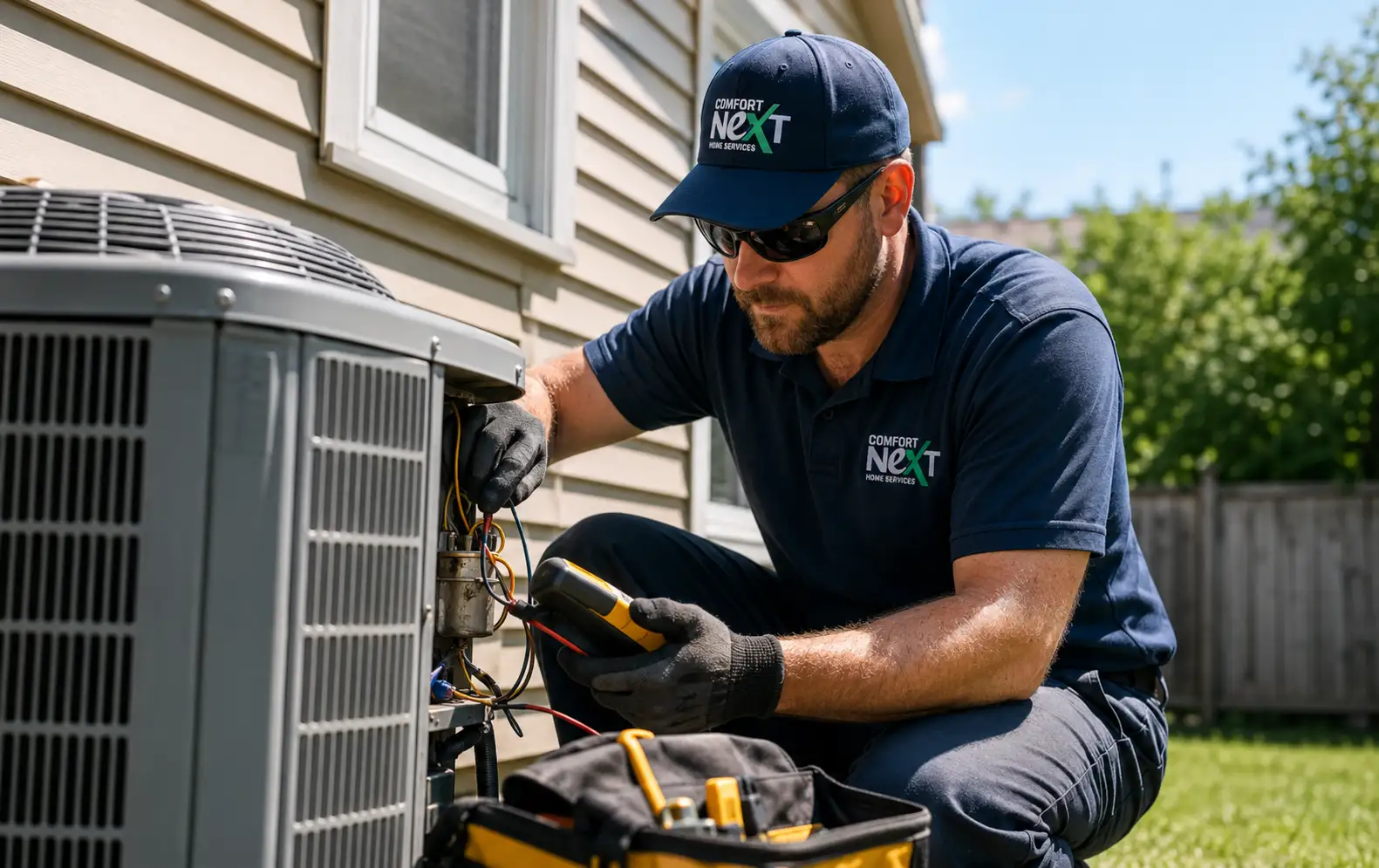
These symptoms can be caused by low refrigerant, a failing capacitor, dirty coils, blocked airflow, electrical issues, a clogged drain line, or a failing motor.
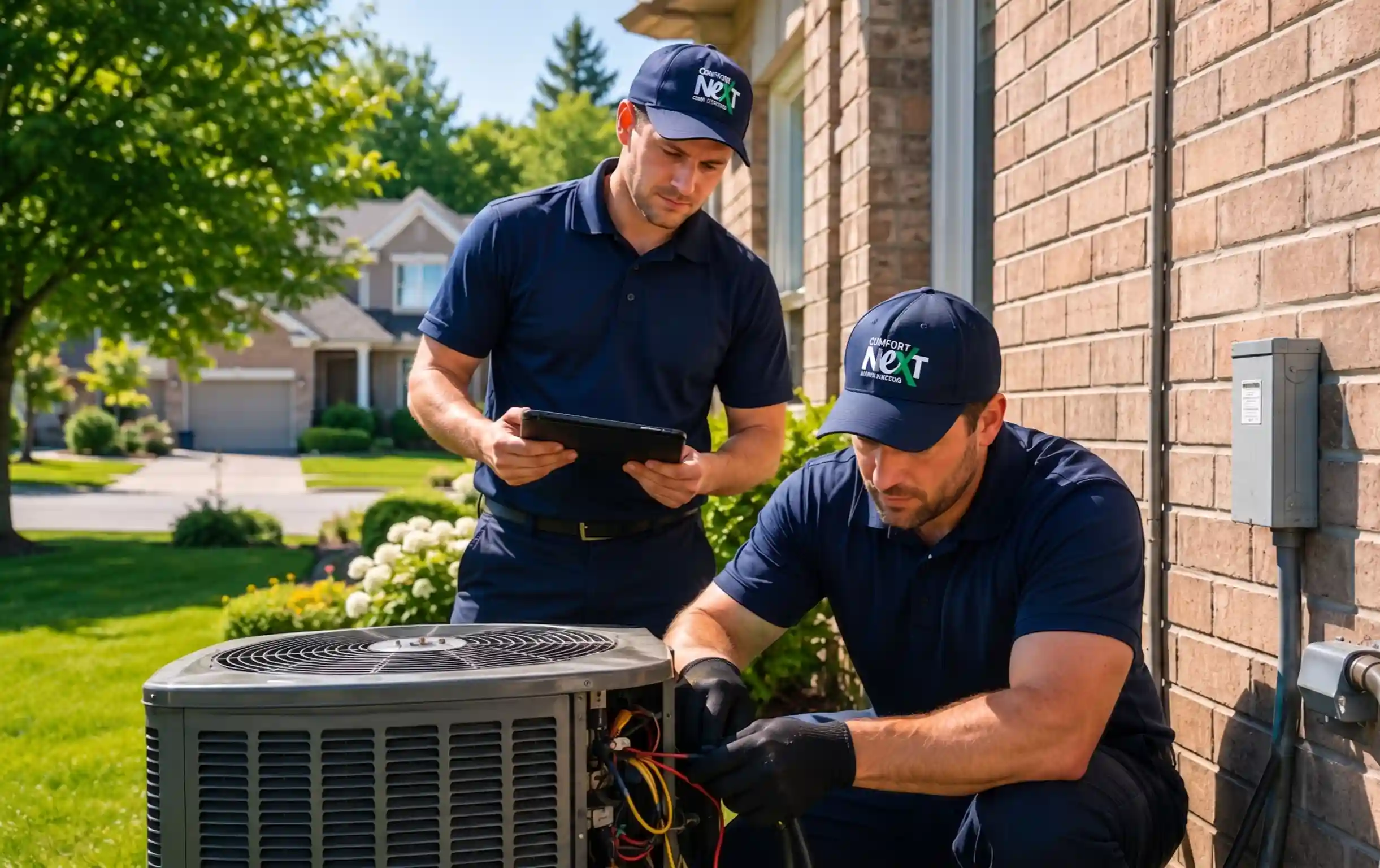
Comfort Next is a professional HVAC company in Aurora helping homeowners with AC repair, maintenance, and cooling system service during hot Ontario weather.
When the Heat Wave Is Also an Air Quality Issue
Extreme heat can sometimes come with poor air quality, humidity, and higher health risks, especially for older adults, children, people with respiratory conditions, and anyone spending time outdoors.
For local heat alerts, check Environment Canada weather alerts. For heat safety guidance, Health Canada also provides practical advice on staying healthy in extreme heat.
Your AC is not just about comfort during a heat wave. It can help keep your indoor space safer, cooler, and more manageable when outdoor conditions become difficult.
Need AC Help in Aurora?
If your AC is running but not cooling, blowing warm air, freezing up, leaking, or struggling to keep your home comfortable, do not wait for a complete breakdown.
Contact Comfort Next for AC repair service in Aurora and nearby Ontario communities. A technician can inspect the system, find the cause, and help restore reliable cooling during the heat wave.