

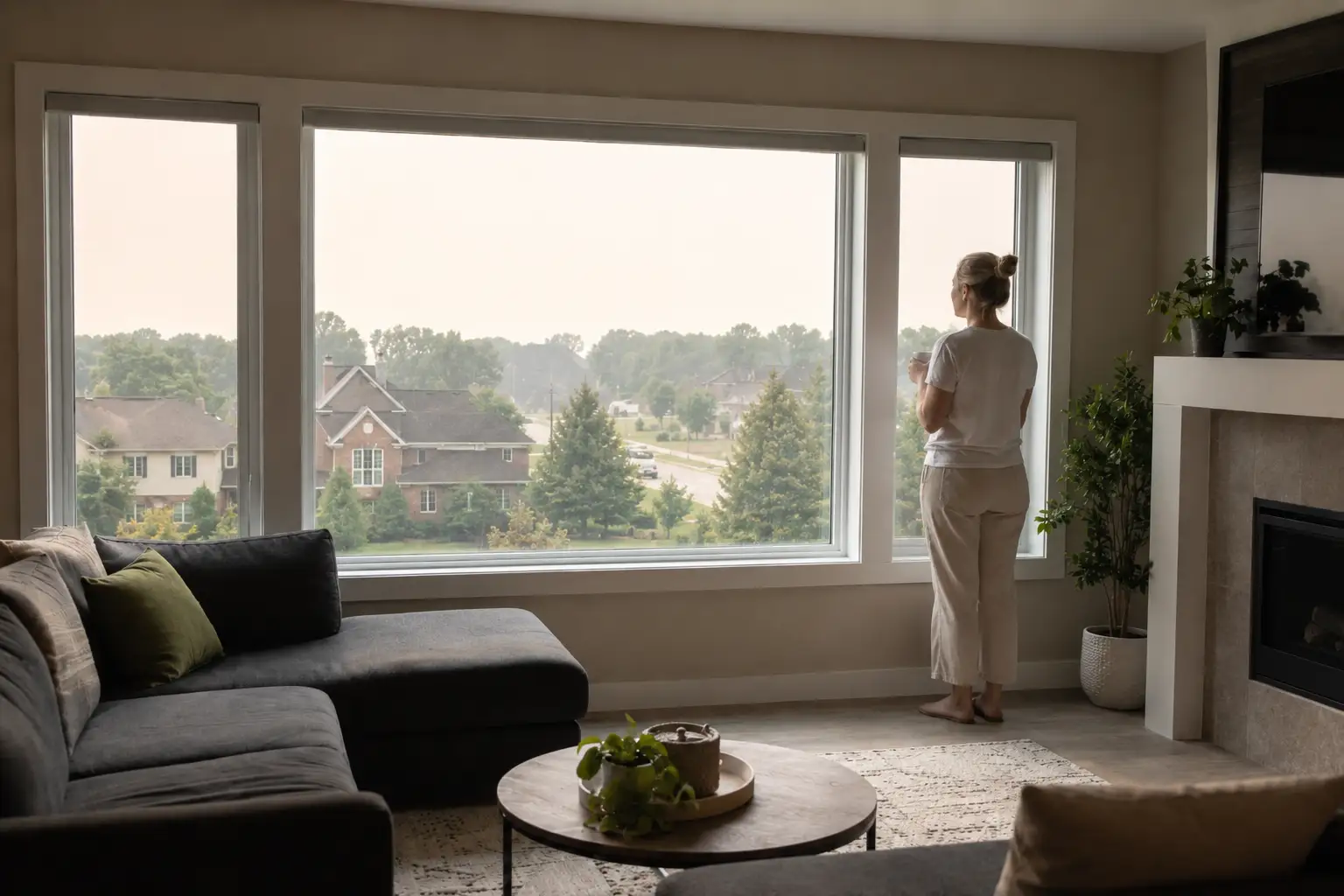
Wildfire smoke is no longer only a concern for communities close to active fires. Smoke can travel hundreds or even thousands of kilometres, affecting air quality in cities and towns far from the source — including Aurora, Ontario. When outdoor air quality drops, the air inside your home can also be affected, especially if smoke particles enter through windows, doors, small gaps, or your HVAC system.
For homeowners in Aurora, improving indoor air quality is becoming an important part of home comfort, especially during wildfire season. The right HVAC filtration and air purification solutions can help reduce the amount of smoke, dust, allergens, and airborne particles circulating through your home.
Why Wildfire Smoke Is a Problem for Indoor Air Quality
Wildfire smoke is made up of a mixture of gases and fine particles. One of the biggest concerns is fine particulate matter, often called PM2.5, because these tiny particles can be inhaled deeply into the lungs. Health Canada recommends using the highest MERV-rated filter your HVAC system can safely handle, with MERV 13 or higher recommended for removing fine particulate matter during wildfire smoke events.
Even if your windows and doors are closed, smoke particles can still enter your home through:
- Small gaps around windows and doors
- Attic or basement leaks
- Bathroom and kitchen exhaust openings
- Fresh air intakes
- Leaky ductwork
- Standard HVAC filters that are not designed for fine particles
This is why indoor air quality solutions are especially important when Aurora and surrounding areas experience smoky or hazy conditions.
How to Check Air Quality in Aurora
Before spending time outdoors or opening your windows, check the Air Quality Health Index, also known as the AQHI. The AQHI provides current and forecast air quality information for Ontario and helps people understand the health risk associated with outdoor air pollution.
When the AQHI is high, it is usually best to keep windows and doors closed, reduce outdoor activity, and focus on keeping indoor air as clean as possible.
Can Your HVAC System Help With Wildfire Smoke?
Yes — your HVAC system can help improve indoor air quality during wildfire smoke events, but only if it is equipped with the right filtration and air purification products.
A basic furnace or air conditioner filter is usually designed to protect HVAC equipment from large dust particles. It may not be effective enough to capture the fine smoke particles that affect indoor air quality.
For better protection, homeowners in Aurora may benefit from two key solutions:
1. MERV 16 Air Filters for Better Smoke Particle Filtration
A MERV 16 filter is a high-efficiency air filter designed to capture much smaller airborne particles than standard filters. For homes affected by wildfire smoke, upgrading to a higher-efficiency filter can help reduce the amount of fine smoke particles, dust, pollen, and other contaminants moving through the HVAC system.
Health Canada recommends using the highest MERV-rated filter your HVAC system can safely handle, with MERV 13 or higher recommended when the system is compatible.
A MERV 16 filter can be a strong option for indoor air quality, but it is important to make sure your HVAC system can handle it. Higher-MERV filters can restrict airflow if the system is not compatible. That is why a professional HVAC assessment is recommended before upgrading.
Benefits of a MERV 16 filter may include:
- Better capture of fine smoke particles
- Reduced dust and airborne debris
- Improved filtration of pollen and allergens
- Cleaner air circulating through your home
- Added protection during wildfire smoke events
For many Aurora homes, a MERV 16 filter can be an excellent solution when properly matched with the HVAC system.
2. iWave Air Purifier for Whole-Home Air Treatment
An iWave air purifier is installed directly inside your HVAC system. As air passes through the system, the iWave uses needlepoint bipolar ionization technology to help reduce certain airborne particles, smoke, odours, allergens, bacteria, and viruses in the air. The iWave-R is designed specifically for residential ducted HVAC systems.
Unlike a portable air purifier that only treats one room, an in-duct air purifier works with your central heating and cooling system to support whole-home air quality.
Benefits of an iWave air purifier may include:
- Whole-home air purification through your HVAC system
- Reduced smoke odours
- Reduced airborne particles
- Support for cleaner indoor air
- No major change to your daily routine
- Professional installation inside the duct system
For homeowners concerned about wildfire smoke in Aurora, an iWave air purifier can be a valuable addition to a high-efficiency filter.
MERV 16 Filter vs. iWave Air Purifier: Which One Is Better?
A MERV 16 filter and an iWave air purifier work in different ways, so the best solution is often to use them together.
A MERV 16 filter physically captures particles as air moves through the HVAC system. An iWave air purifier helps treat the air as it circulates through the ducts. Together, they can provide stronger indoor air quality support than a basic HVAC filter alone.
Quick comparison:
| Solution | What It Does | Best For |
|---|---|---|
| MERV 16 Air Filter | Captures fine particles through filtration | Smoke particles, dust, pollen, airborne contaminants |
| iWave Air Purifier | Treats air inside the HVAC system | Smoke odours, airborne particles, allergens, whole-home air quality |
| Both Together | Combines filtration and air purification | Stronger indoor air quality protection during wildfire smoke events |
If your home is affected by wildfire smoke, a Comfort Next technician can inspect your HVAC system and recommend the right combination based on your equipment, airflow, filter size, and indoor air quality goals.
Other Ways to Improve Indoor Air Quality During Wildfire Smoke
In addition to upgrading your HVAC filtration and air purification system, there are several steps Aurora homeowners can take when outdoor air quality is poor.
Keep windows and doors closed
When smoke is present outside, keep your windows and doors closed as much as possible. This helps reduce the amount of outdoor smoke entering your home.
Use recirculation mode when possible
If your HVAC system has a fresh air intake or ventilation setting, a technician can help you understand whether your system is bringing outdoor air inside. During smoke events, reducing outdoor air intake may help keep indoor air cleaner.
Replace dirty filters more often
Wildfire smoke can load filters with particles more quickly than normal. If your filter looks dirty or your system is working harder than usual, it may need to be replaced sooner.
Seal obvious air leaks
Small gaps around doors, windows, basements, and attics can allow smoky outdoor air to enter your home. Sealing leaks can help improve both comfort and indoor air quality.
Schedule HVAC maintenance
A clean, well-maintained HVAC system can move air more effectively and support better filtration. Dirty coils, clogged filters, and restricted airflow can reduce system performance.
Why Indoor Air Quality Matters in Aurora Homes
Indoor air quality affects more than comfort. It can influence how your home smells, how much dust you notice, how your HVAC system performs, and how comfortable your family feels during poor outdoor air quality days.
People with asthma, allergies, respiratory conditions, heart conditions, children, older adults, and pregnant individuals may be more sensitive to wildfire smoke exposure. Health Canada notes that cleaner air spaces are especially important during wildfire smoke events.
Even if no one in your home has a known health condition, cleaner indoor air can still make your home feel fresher, more comfortable, and better protected during wildfire season.
Do You Need a MERV 16 Filter for Wildfire Smoke?
Not every home needs the same solution. Some HVAC systems can handle a MERV 16 filter, while others may require a different high-efficiency option to avoid airflow issues.
Before installing a MERV 16 filter, it is important to check:
- Your furnace or air handler compatibility
- Filter size and thickness
- Static pressure
- Airflow requirements
- System age and condition
- Ductwork condition
- Manufacturer recommendations
Installing a filter that is too restrictive can reduce airflow, increase energy use, and put extra strain on your HVAC system. A professional HVAC technician can help confirm the safest and most effective option.
Frequently Asked Questions About Wildfire Smoke and Indoor Air Quality
Still have questions?
Our experts are here for you 24/7 — contact us for answers and personalized advice.
Professional Indoor Air Quality Solutions in Aurora, ON
If wildfire smoke is affecting your comfort at home, Comfort Next provides HVAC services in Aurora and can help you choose the right indoor air quality solution for your home’s heating and cooling system.
Our team can recommend and install indoor air quality products such as:
- MERV 16 air filters
- iWave air purifiers
- Whole-home air purification systems
- HVAC filter upgrades
- Airflow and system inspections
- Seasonal HVAC maintenance
If you are not sure which option is right for your home, you can book a home air quality consultation with Comfort Next and have our team review your HVAC system, filter compatibility, and indoor air quality needs.
Protect Your Aurora Home From Wildfire Smoke
Wildfire smoke can make outdoor air unhealthy and indoor air uncomfortable. The good news is that your HVAC system can play an important role in improving your home’s indoor air quality.
With the right combination of a high-efficiency MERV 16 filter, an iWave air purifier, and proper HVAC maintenance, you can reduce airborne particles and help your family breathe cleaner air during wildfire smoke events.
If you live in Aurora, ON, and want to improve your indoor air quality, contact Comfort Next today. Our team can inspect your HVAC system, recommend the best solution, and help protect your home from wildfire smoke.
Call Comfort Next today to learn more about indoor air quality solutions in Aurora, Ontario.


