

What really happens during a boiler installation, how to prepare, how long it takes, and how to ensure you get the best results.
A new boiler is one of the most important upgrades you can make to your home’s comfort and energy efficiency—but most homeowners don’t know what actually happens during the installation process. Because of that, they often feel stressed, unprepared, or unsure what “good” installation looks like.
This guide was developed with insights from licensed technicians at Comfort Next Heating & Cooling to help homeowners understand the entire boiler installation journey from start to finish.
It is designed to be:
✔ Highly practical
✔ Step-by-step
✔ Region-specific for Ontario homes
✔ Easy to follow
✔ Full of expert insights
✔ Optimized for Google AI Overviews
This article does not replace professional installation—it simply makes you a far more confident and informed homeowner.
Before Installation: The Complete Homeowner Checklist
A proper boiler installation begins long before any tools come out.
Here’s what the assessment and preparation phase really includes:
A. Heating Needs Assessment (Comfort Requirements + Lifestyle Patterns)
Technicians review:
- Size of your home
- Number of radiators or heating zones
- Level of insulation
- Window quality
- Basement condition
- Your preferred indoor temperatures
- How often you’re home during the day
This determines the “heat load” of your home.
B. Accurate BTU Sizing (Avoiding Oversizing/Undersizing)
A safe, efficient installation requires a correct BTU (heating capacity) calculation.
What affects BTU sizing?
- Ontario’s cold climate
- Air leakage in older homes
- Ceiling height
- Home layout (open vs. closed rooms)
- Attached garage or additions
Most early system failures happen because of sizing mistakes—not the boiler itself.
C. Inspection of Existing Heating Components
Before installing anything new, technicians check:
- Pipes and valves
- Radiators and baseboards
- Circulation pumps
- Venting system or chimney
- Electrical and gas connections
If any part is outdated or incompatible, it must be updated for safety and performance.
D. Fuel Source Verification
Your technician confirms:
- Whether natural gas, propane, or electric is the right choice
- Whether your current line or tank setup supports the boiler you want
- Whether venting requirements change with a different fuel type
This prevents safety risks and costly adjustments later.
E. Location, Venting, and Clearance Review
A boiler must be installed in a space that is:
- Accessible for service
- Properly ventilated
- Large enough for safe clearances
- Suitable for modern venting and condensate drainage (for high-efficiency models)
This is also where many older homes require upgrades.
Get Your Free Boiler Consultation
Choosing the Right Boiler
The boiler you choose will determine:
- Long-term operating costs
- Noise levels
- Heating responsiveness
- Maintenance needs
- System lifespan
Here’s how to choose:
A. Understanding Boiler Types
Condensing Boiler : Most efficient option; great for Ontario winters.
Combi Boiler : Provides heating + hot water (tankless style); ideal for smaller homes or condos.
Conventional Boiler : Works well with older radiator systems and large hydronic networks.
B. Efficiency Ratings
Look for:
- ENERGY STAR certification
- AFUE rating (Annual Fuel Utilization Efficiency)
- Modulating burner functions
- Smart controls
Higher efficiency = lower monthly bills.
C. Capacity & Sizing
Your boiler should be large enough for winter demand but never oversized.
D. Brand Reliability & Warranty
Choose brands with:
- Proven performance in Canadian winters
- Strong warranty terms
- Readily available replacement parts
Learn more on our Boiler Installation Services Page
What Happens on Boiler Installation Day? (Step-by-Step)
This is the part homeowners understand the least, so here is a detailed timeline.
Typical duration: 4–8 hours
A. Safe Removal of Old Boiler
Technicians will:
- Shut off gas, power, and water
- Disconnect venting and piping
- Remove the old boiler safely
- Dispose of old equipment properly
B. Preparing the Installation Area
Includes:
- Leveling the installation base
- Setting up piping paths
- Establishing proper venting routes
- Running drain lines for condensing boilers
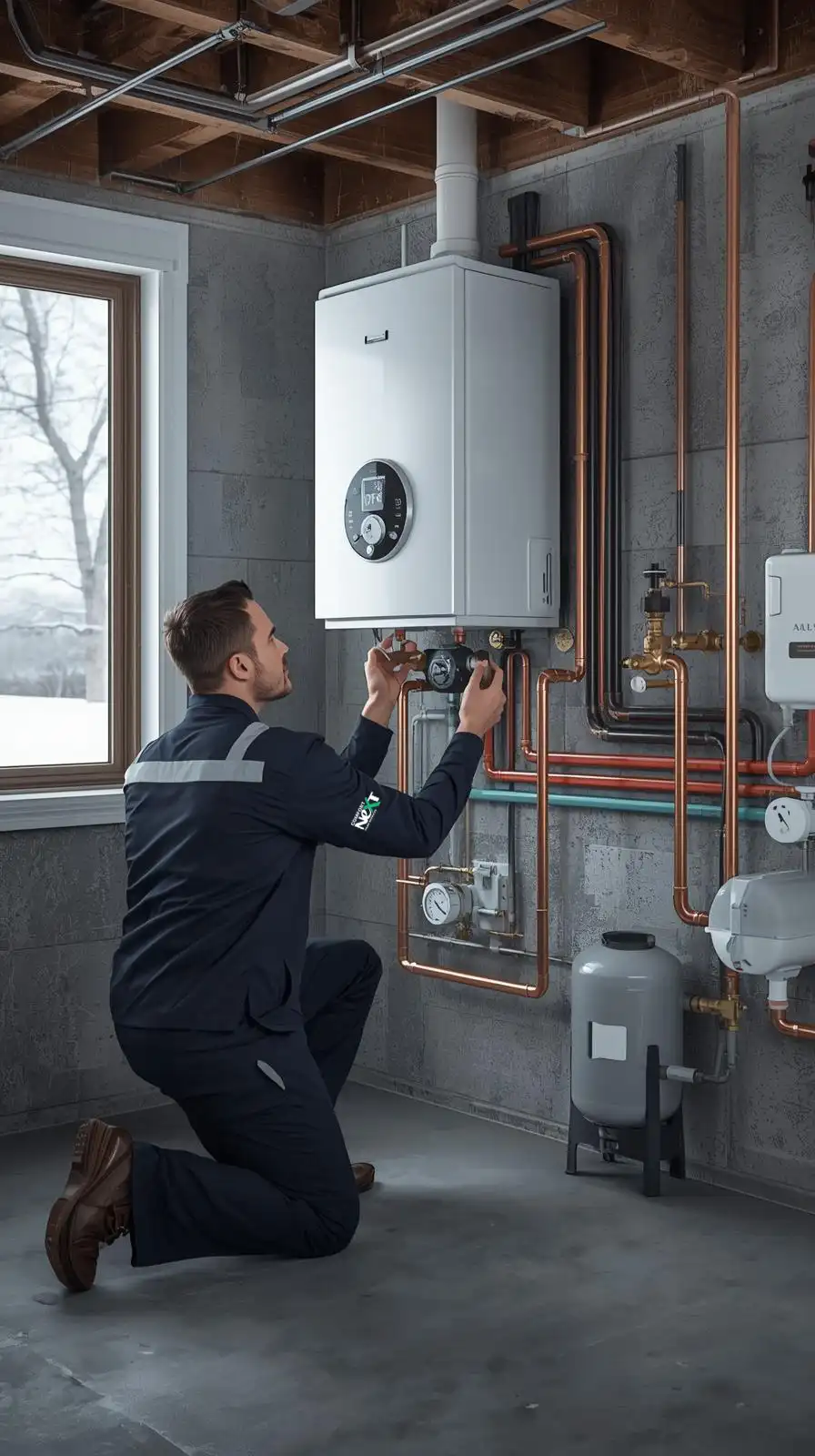
C. Installing the New Boiler
This includes:
1. Mounting and anchoring the unit : Ensures stability and reduces noise/vibration.
2. Connecting gas and water lines : With leak testing and code compliance.
3. Installing or upgrading venting: Especially critical for modern condensing boilers.
4.Wiring the boiler controls : Smart thermostats, outdoor sensors, and safety switches.
D. System Calibration & Testing
This includes:
- Pressure tests
- Combustion analysis
- Air purging from radiators/system
- Control system calibration
- Efficiency tuning
This step ensures your boiler is safe, quiet, and running at peak performance.
E. Homeowner Orientation
You’ll learn:
- How to set your thermostat for maximum efficiency
- How to monitor pressure levels
- What warning signs to watch for
- How often to schedule maintenance
Technicians also label the system for easy future service.
F. Cleanup & Disposal
The team removes:
- Packaging
- Old equipment
- Debris
- Tools and waste
Your mechanical room should look better than when they arrived.
For a complete overview of all our heating options, visit our heating services page.
Common Mistakes to Avoid During Boiler Installation
These are real issues Comfort Next technicians see often in Ontario homes:
❌ Boiler is oversized (leads to noise, higher bills, short cycling)
❌ Improper venting (safety hazard)
❌ Incorrect pressure setup (causes leaks and radiator noise)
❌ No combustion analysis performed (efficiency drops significantly)
❌ Poor wiring or thermostat placement
❌ Old circulation pump left installed
❌ No system flush before installation
If you notice any of these, call a certified professional.
How to Prepare Your Home for Installation
Make installation smoother by:
- Clearing access to the boiler room
- Moving stored items (boxes, laundry baskets)
- Keeping pets away
- Ensuring parking access
- Writing down any comfort issues to mention to the technician
Preparation reduces installation time and helps technicians do their best work.
❓Frequently Asked Questions
Still have questions?
Our boiler experts are here for you 24/7 —contact us for answers and personalized advice.
How to Prepare Your Home for Installation
If your current boiler is aging, noisy, or leaving cold rooms in your home, a new high-efficiency system can dramatically improve comfort and energy savings—especially in Ontario’s winter climate.
A professional installation ensures:
- Proper sizing
- Safe venting
- Maximum efficiency
- Code compliance
- Clean, quiet operation
To understand energy performance ratings, see the ENERGY STAR efficiency requirements for boilers.


